String Inverters vs Microinverters: Which One Fits Your Solar System?
Sep 16, 2026
Ask five installers which inverter to use and you'll get one quick answer followed by five minutes of arguing. Both string inverters and microinverters turn the DC your panels make into the AC your building uses. They disagree on almost everything else: where the conversion happens, how much shade you can tolerate, what happens when something fails, and what you pay per watt.
This guide breaks the decision into short sections — architecture, head-to-head specs, and the applications where each one wins.
Quick Answer
If this sounds like your project
Start with
Clean, unshaded roof and budget matters mostString inverter
Shade, dormers, or four different roof orientationsMicroinverter
Battery storage planned within a few yearsHybrid string inverter
Large commercial rooftop or carportString inverter
You want to see which single panel underperformsMicroinverter
How the Two Architectures Differ
String inverters: one box, many panels
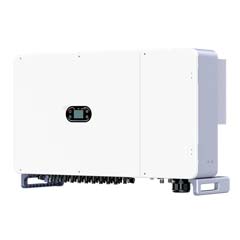
A string inverter sits in one place — garage wall, utility room, shaded southern wall — and takes DC from a series of panels wired together. The whole string feeds one or two MPPT channels, and the inverter converts everything at once.
What a string inverter gives you
Fewer devices, lower cost per watt, easy access for service, and a well-proven track record over 25 years of rooftop work.
What a string inverter costs you
Every panel in a string is only as strong as the weakest one. Shade a single module, or let dust and bird droppings build up on one corner of the array, and the whole string loses output. Panel-level data isn't available unless you add optimizers.
Microinverters: one converter per panel
A microinverter bolts to the racking under each module and converts that panel's DC to AC right there. AC then travels down to the breaker panel.
What a microinverter gives you
Panel-level MPPT and panel-level monitoring as standard, no single point of failure for the whole array, and no high-voltage DC running across your roof.
What a microinverter costs you
A higher price per watt, more devices that can fail (and each failure needs roof access), and a harder ceiling on system size for commercial plants.
Head-to-Head Comparison
What matters
String inverter
Microinverter
Upfront cost per wattLower — one unit covers the arrayHigher — you buy one per panel
Shade and soiling toleranceWeak — one blocked panel drags the stringStrong — each panel works independently
MPPT granularityPer string (1-2 channels typical)Per panel
MonitoringSystem level; panel level needs optimizersPanel level out of the box
Failure impactWhole array stops; easy to swap indoorsOne panel drops out; repair is on the roof
DC voltage on the roofHundreds of volts DC across the arrayConverted at the panel; AC from the roof
Scaling and ceilingKilowatts to megawatts; parallel invertersPractical for homes and small commercial
Battery readinessHybrid models add storage nativelyNeeds a separate AC-coupled storage system
Service and sparesOne device, ground-level accessMany devices, roof access for each
Best-fit projectClear roofs, ground mounts, storage-ready homesShaded or multi-angle roofs, small arrays
Bottom lineCheapest reliable path when the roof is cleanWorth the premium when shade or complexity is real
Where String Inverters Still Win
Cost and scale
On a 10 kW residential array, the inverter is a small slice of the bill. On a 500 kW commercial rooftop, string inverters are several times cheaper than putting a microinverter behind every module.
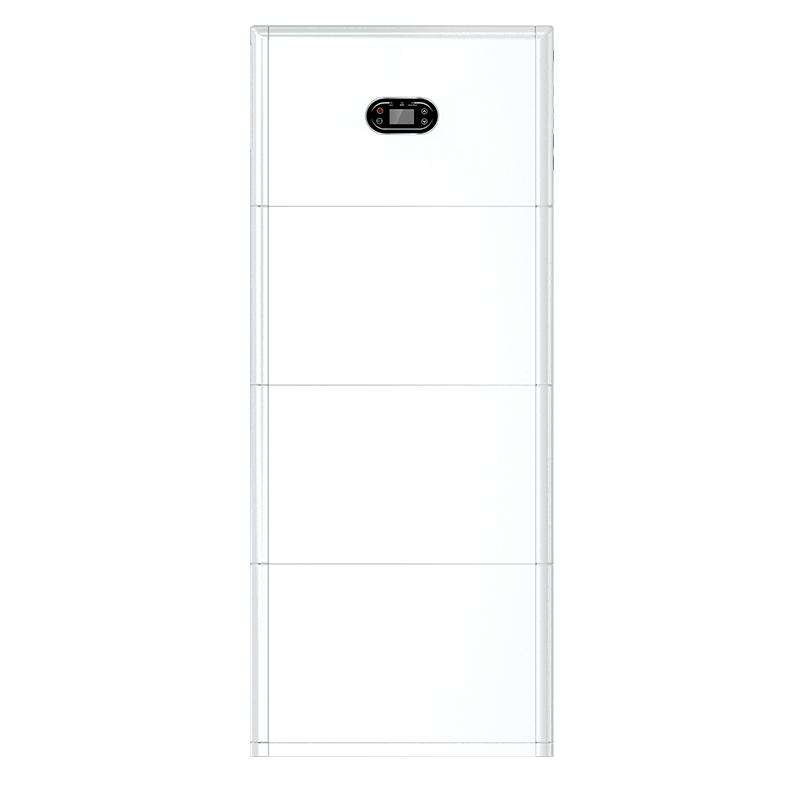
Add storage to the picture and the gap widens: a hybrid string inverter charges a battery directly, while a microinverter array needs a separate AC-coupled system stacked on top — often costing more than a 5KW All-in-one Solar Energy Home Storage System would have from the start.
Service and spares
When a string inverter fails, one technician swaps one box at ground level. Microinverter replacements mean roof access, and roof access means labor, safety gear, and a homeowner who wonders why the crew is back.
Where Microinverters Make More Sense
Shade and roof complexity
Not a little shade — real shade. A chimney, a dormer, three mature trees, or a roof that faces four different directions. Panel-level MPPT turns those awkward roofs from poor projects into viable ones, because a shaded module no longer taxes its neighbors.
Safety and rapid shutdown
Microinverters convert at the panel, so no high-voltage DC string runs across the roof. That matters in markets with strict rapid-shutdown requirements, and it matters to firefighters on the scene.
Panel-level monitoring
For households that want to know exactly which panel is underperforming, panel-level data is the whole point. With a string inverter you either pay for optimizers or you watch the array as a single number.
Hybrid Inverters: The Middle Path
What it changes
A third option that didn't exist a decade ago. An All in One Inverter with Lithium Battery Solar Storage unit keeps the central string architecture but adds a battery port and an energy-management brain: solar goes to the load first, surplus charges the battery, and only the remainder gets exported.
Why it matters for new builds
Pair it with LiFePO4 storage and you get backup power during outages plus the ability to shift cheap hours into expensive ones. For most new residential builds, this is the architecture worth pricing first — string-inverter economics, storage without an AC-coupled retrofit later.
Applications: Which Architecture Where
Application
Best fit
Why
Residential rooftop, clean and unshadedString or hybrid inverterLowest cost per watt, battery-ready
Residential rooftop, shaded or multi-angleMicroinverterPanel-level MPPT recovers the shaded yield
Commercial and industrialString, or all-in-one for storageScale, three-phase output, string-level monitoring
Off-grid and backup powerHybrid string inverterMust charge a battery bank directly
Residential Rooftops
Clean, south-facing roofs with modern, well-matched panels: string or hybrid inverter. Complex roofs with shade, dormers, or multiple orientations: microinverters usually win on lifetime yield, even with the higher sticker price.
Either way, the system only earns its keep when the daytime surplus has somewhere to go — pairing the array with an All in One Residential Battery Energy Storage System covers the evening load instead of buying it back from the grid.
Commercial and Industrial
Commercial rooftops and carports are where string inverters dominate, and for good reason — hundreds of modules, three-phase output, string-level monitoring, and a service plan that doesn't involve walking on a membrane roof forty times a year. For C&I projects that also need peak shaving or demand control, a hybrid or All in One Solar Energy Storage System covers both jobs.
Off-Grid and Backup Power
Off-grid systems live or die by battery charging, so a hybrid inverter with a proper charge controller is the standard build. Microinverters are a poor fit here — they can't charge a battery bank directly, and off-grid rarely has the grid to fall back on while you sort out an AC-coupled workaround.
What to Check Before You Buy
What to check
Why it matters
Shade survey before you decideShade is the single biggest factor in choosing an architecture — measure it, don't guess
Inverter DC/AC ratioUndersizing clips your best production hours; oversizing wastes money
Battery plan, even if it's laterRetrofitting storage onto a microinverter array costs more than choosing a hybrid now
Local rapid-shutdown and code rulesSome markets push you toward panel-level electronics regardless of shade
Warranty term and who services itA 25-year warranty is worthless if every replacement means a crew on the roof at your cost
Efficiency at real temperaturesRoof-mounted electronics bake in summer; check derating specs, not just peak efficiency
Bottom Line
There's no universal winner, and anyone who tells you otherwise is selling one of them. If your roof is open and your goal is the lowest cost per kilowatt-hour with storage as an option later, a string or hybrid inverter is the practical choice. If shade, roof complexity, or panel-level insight is central to the project, microinverters earn back their premium over the system's life.
Whichever way you go, the panels, inverter, and battery have to speak the same language — matched voltages, one firmware stack, one warranty contact. That is where buying from an All in One Solar Energy Storage System Manufacturer saves you the finger-pointing that follows a mixed-brand system.
The useful next step is a shade study and a storage plan. Run those two first and the inverter decision usually makes itself.